
The importance of formulation development in pharmaceutical innovation is increasing, partly due to economic factors and also due to the fact that the proportion of poorly water-soluble active pharmaceutical ingredients (APIs) is rapidly increasing. Therefore, research aims developing new technologies to enhance the bioavailability of poorly water soluble APIs. The excipients (cyclodextrins, polymers and surfactants) used in technologies that show promise in these areas, because they enhance the dissolution of the API, they may also have a negative impact on the permeability of the API.

Traditional dissolution tests have been used in the pharmaceutical industry to perform quality control of manufacturing process for drug products, and to compare performance of different drug product formulations during their development process. Although dissolution tests are well suited for quality control purposes providing a simple, reproducible and cost-effective way of analyzing final dosage forms, the results of these tests are often not in vivo predictive.
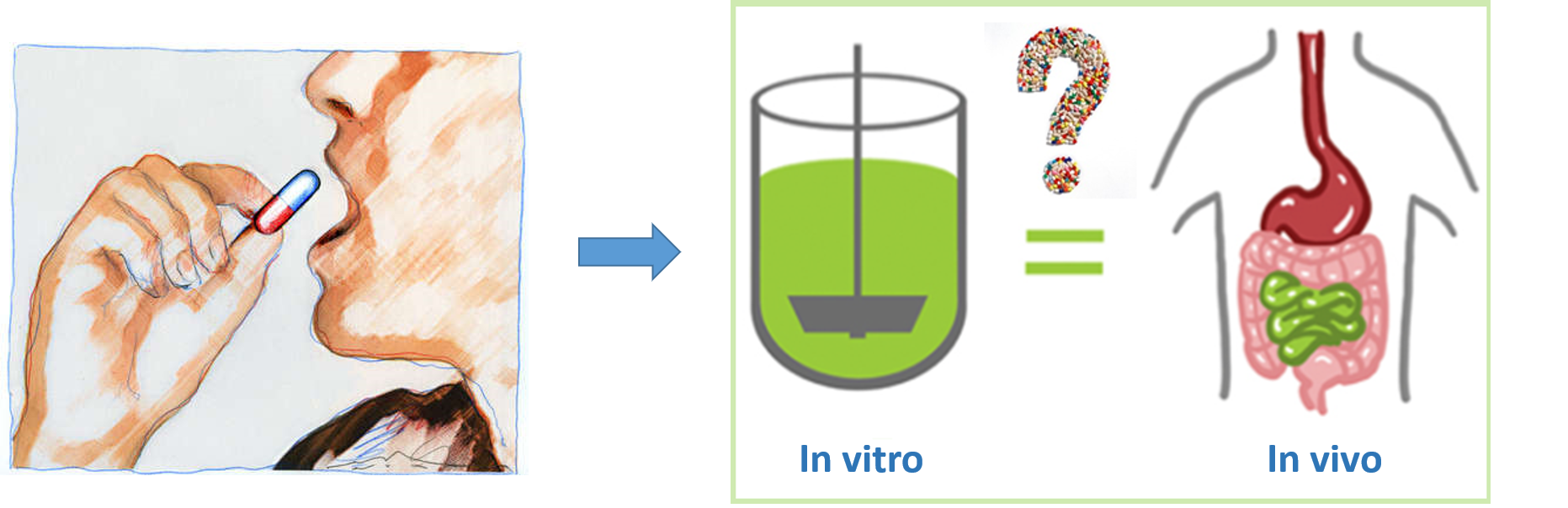
From the research and development point of view however the industry seeks new tools for improving the biorelevance and the in vivo predictability of the in vitro tests. Underneath the urge to minimalize clinical trials by using in vitro and in silico tools lay many ethical and economic reasons.
In vitro apparatuses which enable the use of simultaneous dissolution-permeation tests have an artificial membrane between the donor and acceptor chamber. In practice, costly and sensitive biomimetic membranes are most often used as artificial membranes. These membranes are typically lipids dissolved in organic solvents like n-dodecane, n-hexadecane supported by hydrophobic polyvinylidene fluoride (PVDF) filter. The other perspective is the non-biomimetic size-exclusion or so-called dialysis membranes which usually made of cellulose, regenerated cellulose or cellulose-acetate. These chemically more resistant and reusable size-exclusion membranes can be a good alternative to lipid membranes in the presence of formulation additives.

Dissolution-permeation assays are suitable to investigate the solubility-permeability interplay and any related formulation effect, as they allow us to simultaneously characterize the concentration change in the donor side over time and the transport through the separating membrane. There is a new concept called Absorption Driven Drug Formulation that applies flux assays in all stages of formulation development to gain a better understanding of the flux provided by the formulation allowing us to more accurately predict the in vivo performance of the developed formulation.
The ADDF concept utilizes three types of flux assays throughout the development process:
•Initially, 96 well plate based flux assays, called Parallel Artificial Membrane Permeability Assay (PAMPA) are done to characterize the possible interaction between the API and the excipients.
•In the next stages, small volume flux assays are done with µDiss Profiler to understand the behaviour of more complex lab formulations or pre-formulation samples and to compare various formulation strategies.
•In the final stage of the development, biorelevant volumes are used in the donor side to investigate and compare finished dosage forms.

Collaborating partners
In order to study simultanous dissolution and permeation of drug products our research group at BME is in close collaboration with the research group at Semmelweis University lead by Dr. Gergely Völgyi. For the support in instrumentation we are thankful for Pion Inc.
